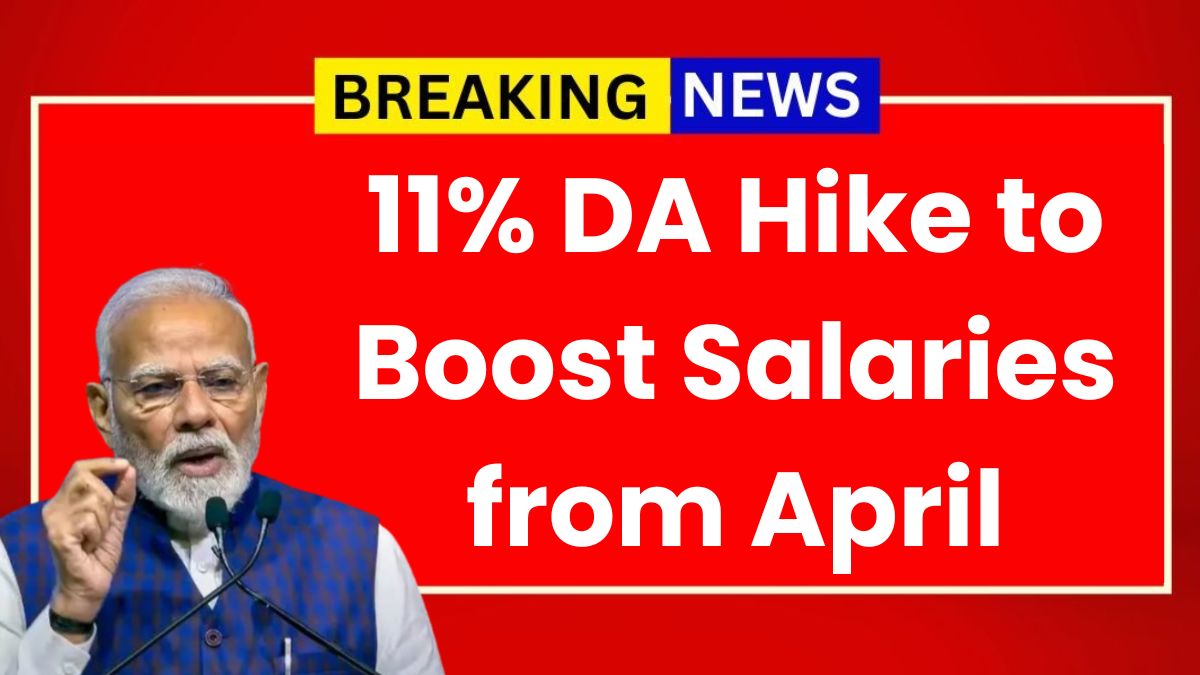
DA Hike – The year 2026 has begun on a promising note for millions of central government employees and pensioners across India. According to various media reports, the central government is reportedly considering a significant hike in Dearness Allowance (DA) — potentially as high as 11 percent. If this decision moves forward, it could bring meaningful financial relief to a vast number of working employees and retired officials. Sources suggest that this revised rate could come into effect from March 2026, arriving at a time when the cost of living continues to climb steadily.
What Is Dearness Allowance and Why Does It Matter?
Dearness Allowance is an additional financial benefit provided to government employees over and above their basic salary. Its core purpose is to shield employees from the economic burden of rising prices. When the cost of goods and services goes up in the market, the real purchasing power of salaried individuals gradually declines. To counteract this effect, the government periodically reviews and revises DA rates based on official inflation data and prevailing economic conditions. This ensures that employees’ take-home pay remains balanced and reasonably aligned with the actual cost of living.
Eyes Also Set on the 8th Pay Commission
Alongside the anticipated DA revision, another major topic generating buzz among government employees is the possible formation of the 8th Pay Commission. The 7th Pay Commission was implemented back in 2016, and it has now been nearly a decade since that landmark revision took place. This has naturally sparked growing expectations that a new Pay Commission could be constituted in the near future. If that happens, it would not only affect DA but could also bring sweeping changes to basic salaries, various allowances, and pension amounts — representing a comprehensive improvement in the overall financial structure for government employees.

How Much Could Salaries Increase?
An 11 percent rise in Dearness Allowance would have a direct and tangible impact on monthly take-home pay. To understand the scale of the benefit — consider an employee drawing a basic salary of ₹30,000 per month. With the revised DA rate applied, their monthly earnings could see a noticeable increase. This additional income would help employees better manage household expenses, children’s education costs, and other everyday financial needs. When calculated over an entire year, this incremental amount could accumulate into a substantial sum, potentially opening up greater opportunities for personal savings as well.
Pensioners Stand to Benefit Too
The potential DA hike would not be limited to active government employees alone. Retired government servants and pensioners would also be in line for a financial boost, as their pension amounts are directly linked to Dearness Allowance rates. Any upward revision in DA would, therefore, proportionally increase monthly pension payouts. For senior citizens who depend on their pension as a primary source of income, this increase could provide much-needed breathing room as they navigate the pressures of rising everyday expenses.
No Official Announcement Yet
It is important to note that, as of now, no formal announcement has been made by the central government regarding this DA revision. The information currently in circulation is based on media speculation and unofficial sources. Until an official notification is issued by the government, this cannot be treated as a confirmed decision. Employees and pensioners are therefore advised to rely on credible government portals and official communications rather than acting on unverified reports.
यह भी पढ़े:
 Unified Pension Scheme 2026: Want a Secure Monthly Income After Retirement? Here’s How It Works
A Positive Outlook for Government Employees
Taken together, the speculation around a substantial DA hike and the growing conversation about a new Pay Commission have generated fresh optimism within the government workforce. If these developments do materialize, they could significantly strengthen the financial standing of employees and retirees alike, while also providing meaningful relief from inflationary pressures. For now, all eyes remain on the government’s final decision, which is expected to bring greater clarity in the weeks ahead.