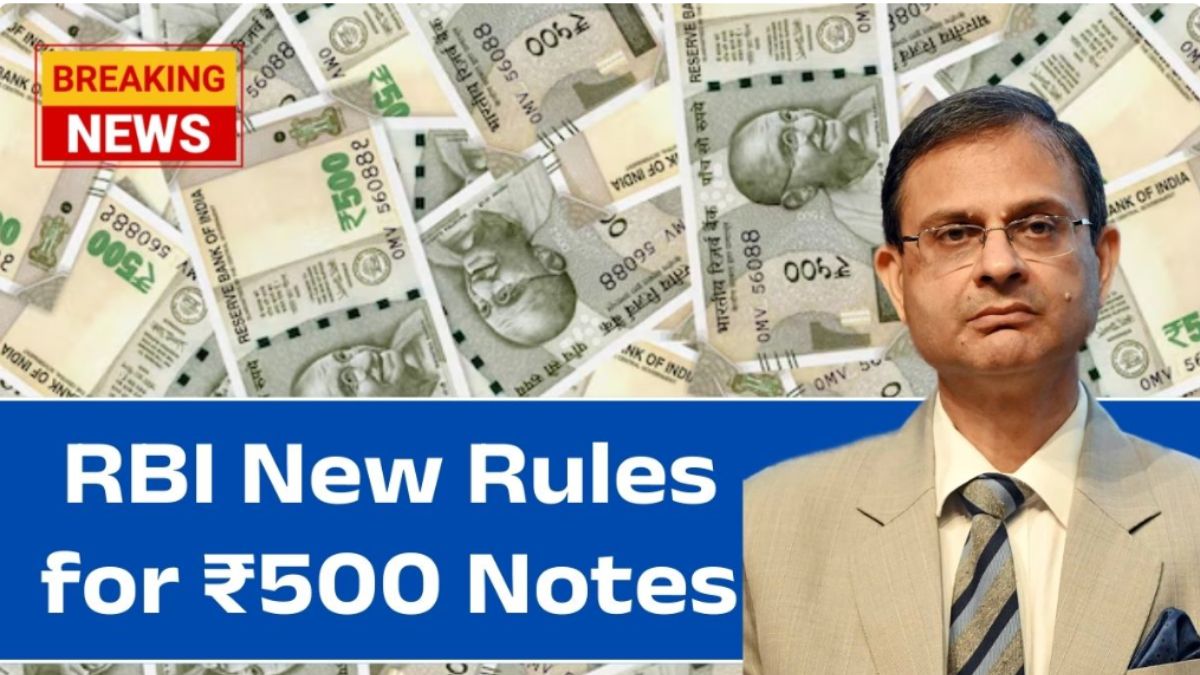
RBI New Guidelines – The Reserve Bank of India (RBI) plays a vital role in maintaining the safety and credibility of the country’s currency system. From time to time, it introduces new regulations and updates to ensure that banknotes in circulation remain secure, genuine, and fit for public use. Recently, the RBI has issued updated guidelines regarding ₹500 currency notes, one of the most widely used denominations in India.
Since ₹500 notes are commonly used in daily cash transactions such as shopping, travel, bill payments, and business dealings, any update related to them directly impacts millions of people across the country. These new guidelines are mainly focused on strengthening currency security, reducing fake note circulation, and improving the quality of cash dispensed through banks and ATMs.
Why Currency Security Is Important
Maintaining trust in the financial system is one of the RBI’s top priorities. Currency notes are not just paper; they represent economic confidence and public trust. If counterfeit or damaged notes circulate widely, it can create financial confusion and losses for ordinary citizens, retailers, and businesses.

Fake currency has been a serious concern for many years. Counterfeit notes can be difficult for common people to identify, especially during rushed transactions. This often leads to disputes between buyers and sellers and may result in direct monetary losses.
To prevent such issues, the RBI regularly reviews the security standards of banknotes. The latest guidelines for ₹500 notes are part of the same effort to ensure that only genuine, safe, and usable currency remains in circulation.
RBI’s Focus on Reducing Fake Notes
One of the main reasons behind these updated rules is the increasing need to control counterfeit currency. Fake notes not only harm individuals but can also affect the larger economy if they spread widely in the market.
यह भी पढ़े:
 Unified Pension Scheme 2026: Want a Secure Monthly Income After Retirement? Here’s How It Works
The RBI has therefore instructed banks and financial institutions to remain more alert regarding the detection of counterfeit ₹500 notes. Banks are expected to verify suspicious notes carefully and report any fake currency cases to the concerned authorities.
By improving surveillance and encouraging strict note verification procedures, the RBI aims to make India’s cash-based transactions more secure and reliable for the public.
New Instructions for Banks and ATM Operators
A major part of the new guidelines is related to banks and ATM cash management systems. Many customers often complain about receiving torn, worn-out, faded, or damaged ₹500 notes from ATM machines.

Such notes create inconvenience because shopkeepers, transport services, and local businesses sometimes refuse to accept damaged notes. This can be frustrating for customers who receive such notes directly from authorized banking channels.
To address this issue, the RBI has directed banks and ATM operators to regularly inspect the currency stocked inside machines. Old and damaged notes must be removed immediately and replaced with fresh, clean notes suitable for public circulation.
Better ATM Cash Quality Monitoring
Under the updated rules, banks must improve their ATM monitoring systems. This includes routine checks of the cash cassettes inside ATM machines and ensuring that unusable notes are not dispensed.

Regular maintenance of ATM machines will now become more important. Banks may need to increase the frequency of cash inspections and machine servicing to comply with RBI standards.
This step is expected to significantly reduce public complaints and improve customer satisfaction during cash withdrawals, especially in high-traffic ATM locations.
Public Awareness About Fake ₹500 Notes
Another important feature of the RBI’s updated guidelines is public awareness. The central bank has emphasized the need for citizens to understand how to identify genuine ₹500 notes.

A real ₹500 note contains multiple security features that help distinguish it from fake notes. These features are specially designed using advanced printing technology and are difficult to duplicate.
The more aware the public becomes, the easier it will be to stop counterfeit notes from spreading in the market.
Key Security Features of Genuine ₹500 Notes
Citizens should always check important security elements while handling ₹500 notes. One of the most visible features is the watermark, which becomes visible when the note is held against light.

Another key feature is the security thread embedded inside the note. This thread contains specific text and visual patterns that help verify authenticity.
Additionally, genuine notes also include micro-lettering, raised printing, color-changing ink, and unique design patterns that are difficult to copy accurately.
These features are introduced specifically to help both banks and common citizens quickly identify genuine currency.

What to Do If You Receive a Suspicious Note
If someone receives a ₹500 note that appears fake, damaged, or suspicious, the RBI advises them to immediately approach the nearest bank branch.
The bank staff can verify whether the note is genuine or counterfeit. If it is found to be fake, the matter is usually reported to the authorities for further investigation.
Prompt reporting helps law enforcement agencies trace the source of counterfeit currency and prevents further circulation of such notes.

Ignoring suspicious notes or using them in transactions may create legal complications, so immediate reporting is always the safest option.
Benefits for Common Citizens
For ordinary people, these new guidelines are highly beneficial. The chances of receiving fake or damaged notes from ATMs and banks are expected to decrease significantly.
This means safer daily cash transactions for households, shopkeepers, travelers, and small businesses that still rely heavily on physical cash.

Improved note quality also increases confidence among citizens while accepting ₹500 notes during purchases and payments.
Impact on Businesses and Retailers
Small shop owners and local businesses often face problems when customers unknowingly hand over damaged or fake notes.
With stricter banking checks and improved ATM note quality, businesses are likely to face fewer such issues.
यह भी पढ़े:
 From April 1, Online Payments Rules Change: RBI Introduces New System Beyond OTP Verification
This will help maintain smoother commercial transactions and reduce losses caused by counterfeit currency.
For retailers, especially in rural and semi-urban areas where cash payments are still common, these updates bring much-needed relief.
RBI’s Long-Term Goal
The latest ₹500 note guidelines reflect the RBI’s long-term vision of maintaining a secure and transparent currency ecosystem.

While digital payments such as UPI and mobile banking continue to grow, cash still remains an essential part of India’s economy.
Therefore, ensuring the safety and quality of physical currency is equally important.
Through stronger bank supervision, public education, and counterfeit prevention measures, the RBI is working to protect both the economy and the public.

Conclusion
The RBI’s updated guidelines for ₹500 notes are an important step toward strengthening India’s financial security. By focusing on better ATM cash quality, counterfeit detection, and public awareness, the central bank aims to make cash transactions safer for everyone.
Although these changes may not be immediately visible in everyday life, they play a crucial role in reducing fake currency circulation and improving trust in the banking system.
For citizens, the best approach is to remain aware of genuine note features and report suspicious notes without delay. These collective efforts will help maintain a stronger and safer currency system across the country.